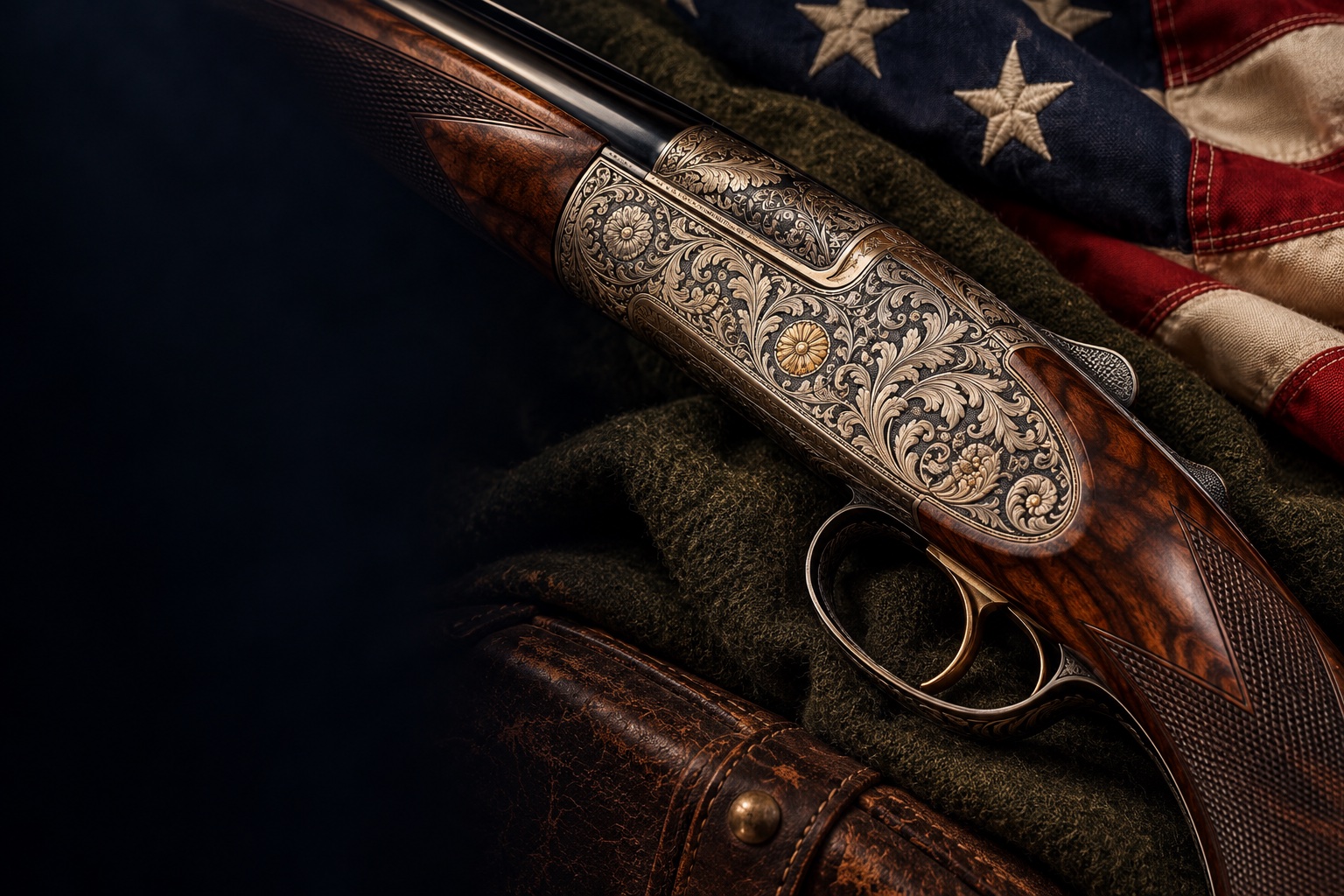
A curve in walnut. A line of scrollwork catching the light. A surface that has softened with age. Historical firearms can be read as objects of design, as well as instruments with serious consequences. Looking carefully means keeping both perspectives in view.
Decoration is part of the story
In nineteenth-century presentation firearms, decoration could express status, public ambition and the skill of a workshop. The Metropolitan Museum of Art describes its gold-inlaid Colt Model 1849 as an exhibition and presentation object: an example of technical achievement used to impress influential audiences. Its ornament was a form of communication.
That context changes the questions we ask. Who commissioned an object? Who was meant to see it? What did its decoration communicate? A beautiful photograph cannot answer those questions alone. Museum records and documented provenance help separate a compelling story from an attractive assumption.
Look closely, claim carefully
Wood grain, the rhythm of ornament and the relationship between bright and dark surfaces all contribute to a design. These are things a reader can appreciate in a museum photograph. They do not establish reliability, condition, authenticity or suitability for use. We keep aesthetic interpretation separate from those judgments.
The Met also notes uncertainty about the makers responsible for some historic decoration. An honest account preserves that uncertainty. A familiar style is a starting point for research, not proof of an individual craftsperson's hand.
Craftsmanship deserves context
Collecting the names of famous makers is only one way into design history. Another is to consider the less visible labor: the people who prepared materials, organized workshops, documented orders and developed visual traditions. Looking at an object as the result of many decisions makes its history richer.
Our illustrated imagery evokes that heritage; it is not documentation of a museum object or evidence of a product inspection. For a real collection object, follow the museum record below and read its attribution, date and curatorial notes together.
How we approach evidence →