Research-only editorial selection. These five designs are selected for historical interest. The order is not a ranking of performance, quality, safety or suitability. We have not conducted hands-on tests.
What this list is trying to do
A list can make a broad subject approachable, but it can also imply more certainty than the evidence supports. “Best” is especially unhelpful when the objects belong to different periods and categories. We have chosen a different question: which five designs offer useful starting points for exploring American gun culture through history, industrial design and the stories attached to objects?
Our editorial criteria are historical adoption, longevity, influence and cultural recognition. We use those as qualitative lenses, not numerical measures. A documented adoption date is evidence of an institutional decision. A persistent model name suggests a history worth examining. Neither produces a universal score. The selection is deliberately small, and its omissions should not be read as judgments that other designs are unimportant.
“American” describes the cultural frame of this series, not an origin requirement. One of these designs comes from an Austrian company; another connects an American inventor with Belgian manufacture. Those relationships are part of the story. A national design culture is shaped by exchange as well as by domestic invention.
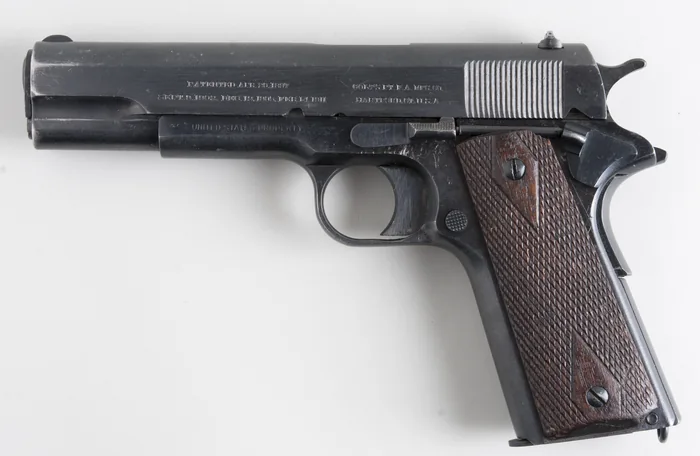
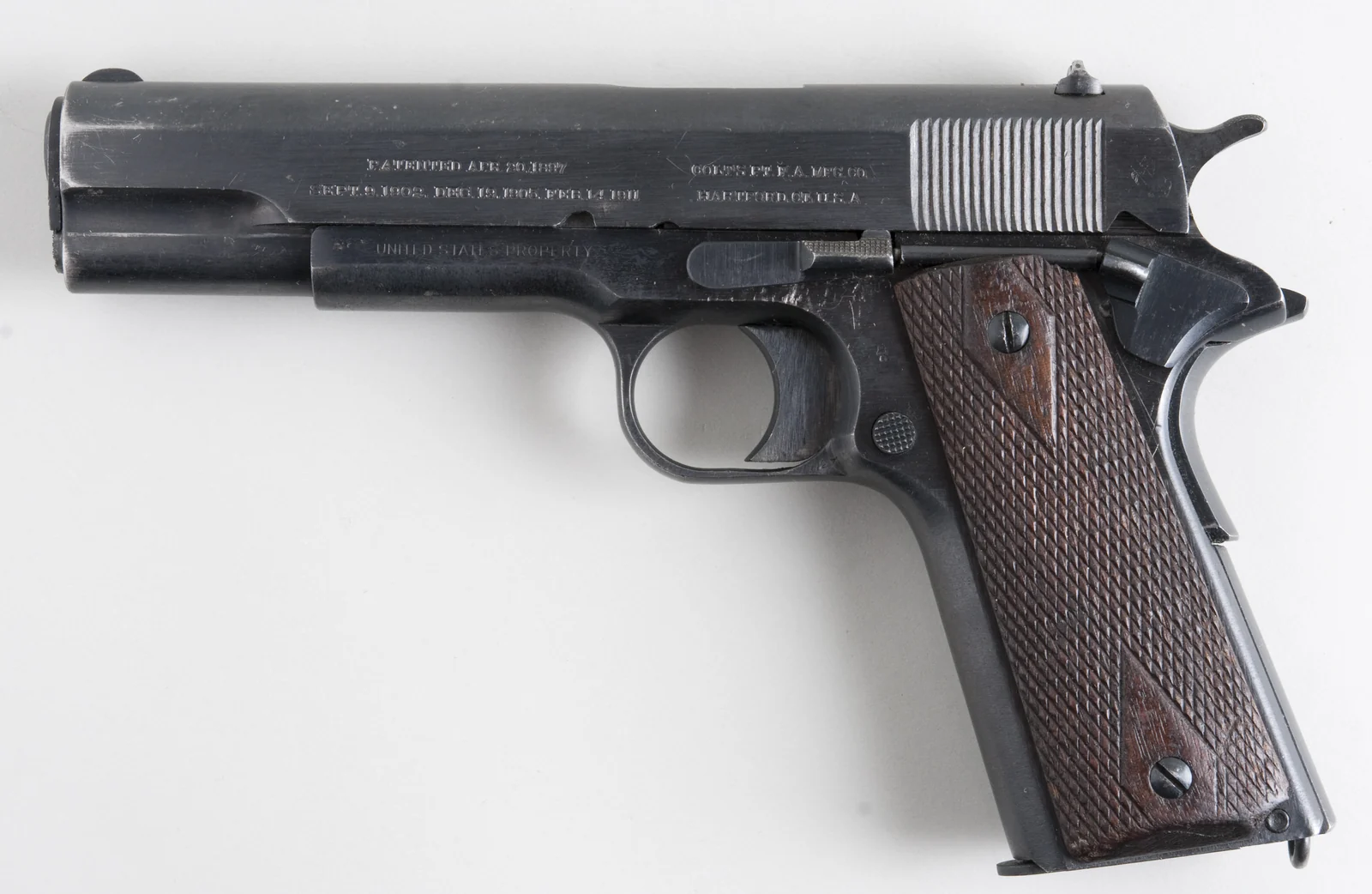
Colt 1911 — a design name with several lives
The 1911 is our entry point into the difference between a specific military designation and a wider design lineage. Army and Navy histories connect it to John M. Browning and early twentieth-century adoption. Later variations and individual artifacts complicate the familiar name. The original M1911 and M1911A1 should remain distinct in a careful account.
Its value to this selection is the question it raises: how does an institutional object become a general cultural reference? We approach that question through records and material histories rather than a claim that every later product shares one quality or reputation. An early museum example and a contemporary derivative are connected subjects, not interchangeable evidence.
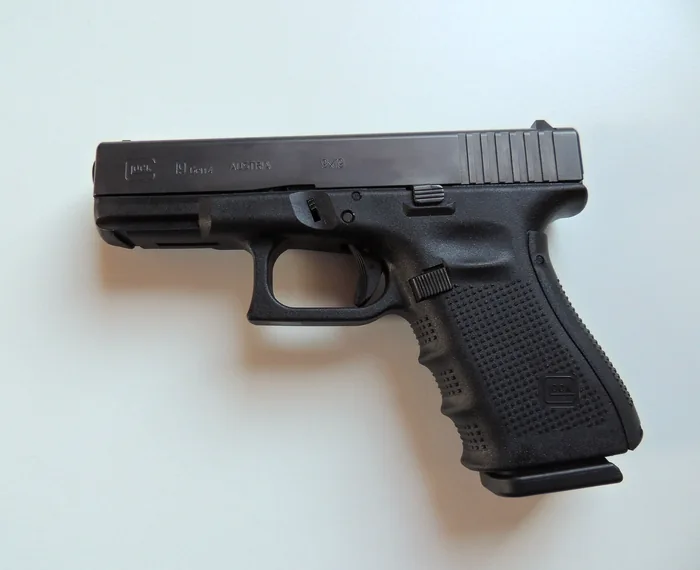
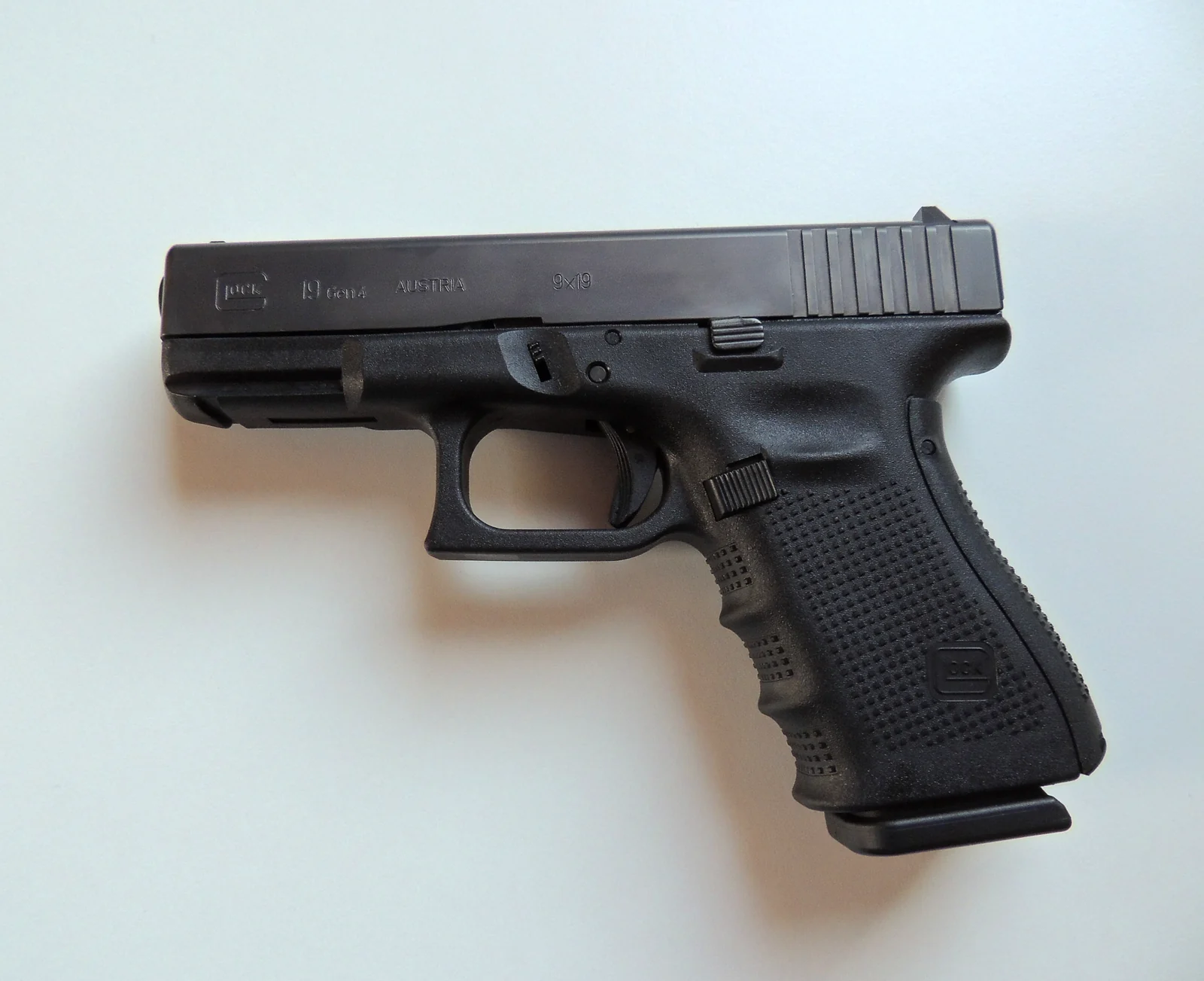
Glock 19 — an international contribution
The G19 brings the series into a more recent design conversation. Glock’s official timeline dates its introduction to 1988 and situates it within a larger Austrian company history. That origin is important: inclusion in an American cultural selection does not turn the model into an American invention.
Our interest is in the persistence of a recognizable model identity across generations. That persistence invites precision rather than generalization. The G19 is not the original G17, the G19X is a separate designation, and a judgment about one generation cannot simply be assigned to every other version. The profile reads manufacturer history as a first-party source, with its promotional limits visible.
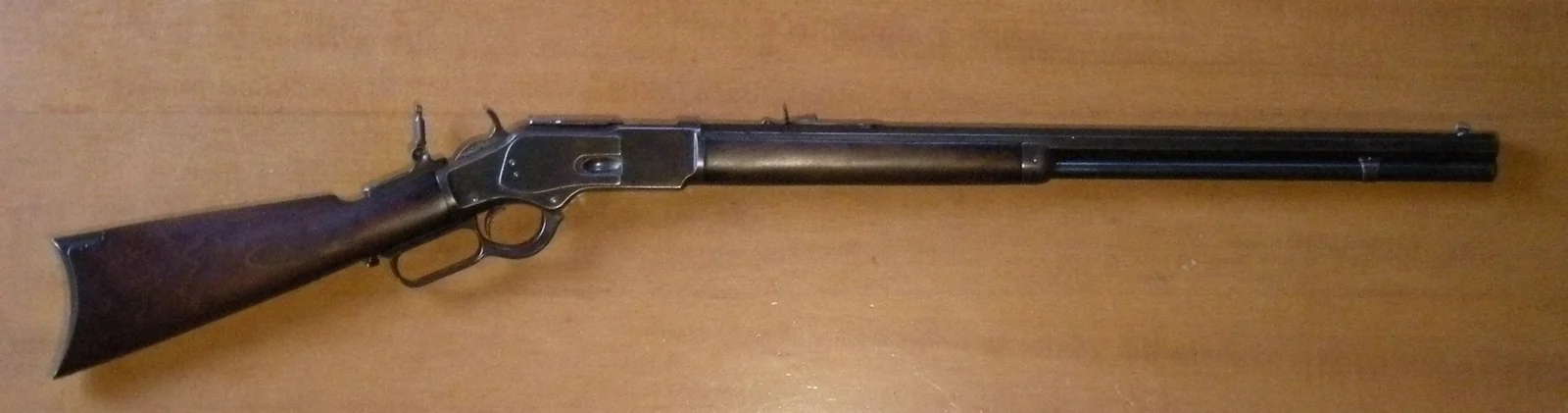
Winchester Model 1873 — where memory meets the record
The Model 1873 offers a way to discuss the powerful imagery of the American West without confusing that imagery with a complete historical explanation. Winchester’s timeline distinguishes it from later lever-action models. That basic specificity matters whenever a generic silhouette threatens to stand in for a named object.
The profile’s anchor is a weathered example documented by the National Park Service after its discovery at Great Basin. Some facts about that object were recoverable; others remained unknown. It is a useful reminder that the most responsible historical account may preserve a question rather than supply a dramatic answer. Cultural recognition makes the subject accessible, but evidence determines how far the story can go.
Read the Winchester Model 1873 profile →
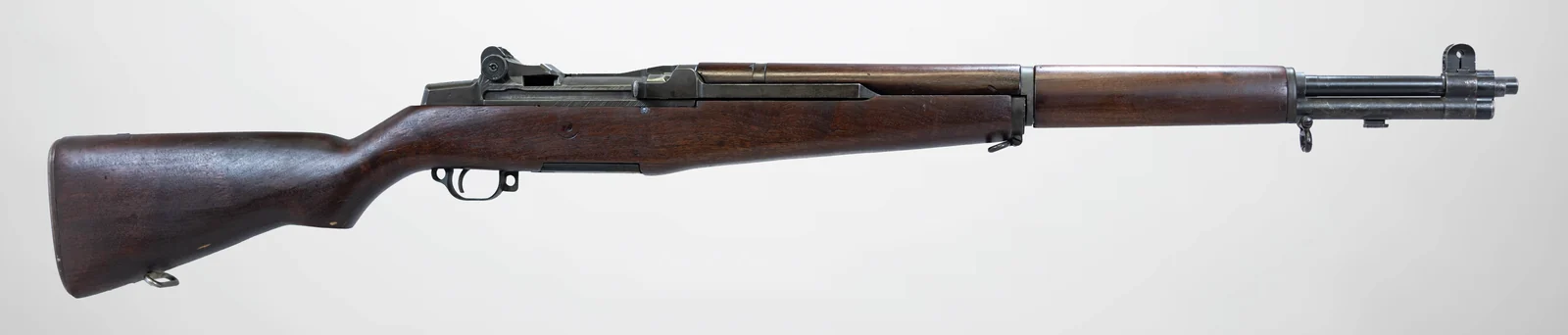
M1 Garand — invention inside an institution
The M1 Garand shifts attention toward industrial and institutional history. The National Park Service’s account connects Canadian-born John C. Garand with Springfield Armory and the rifle’s adoption in 1936. The resulting story is broader than an inventor’s name: migration, development work and organized production all belong in the frame.
We select it because it helps make those relationships tangible. An adoption milestone is different from a production milestone; a prototype is different from a finished production object. The M1 Garand rifle is also distinct from the M1 carbine. Keeping such differences visible makes the industrial story more informative than repeating a celebrated reputation as though it were a test result.
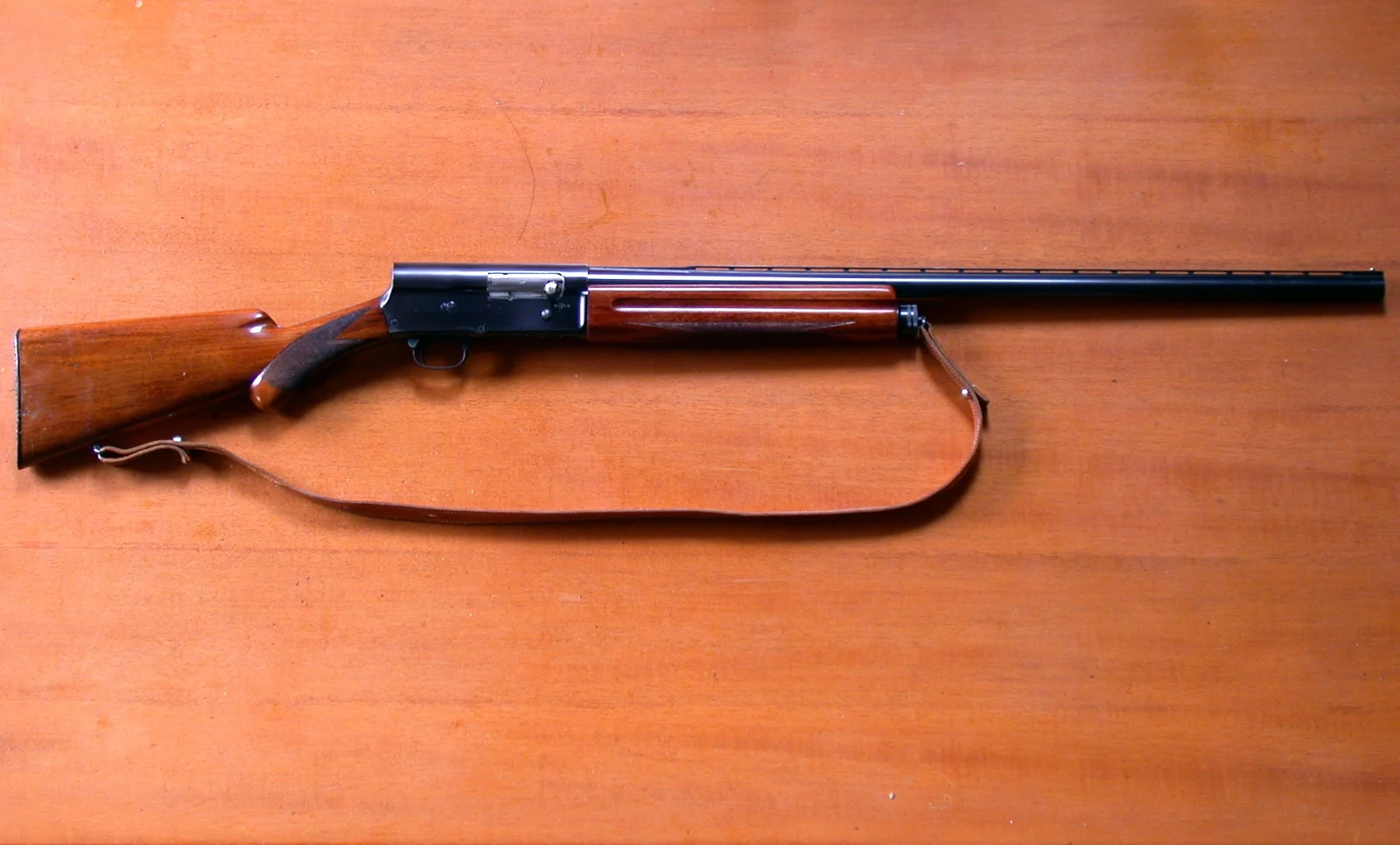
Browning Auto-5 — a silhouette and its afterlife
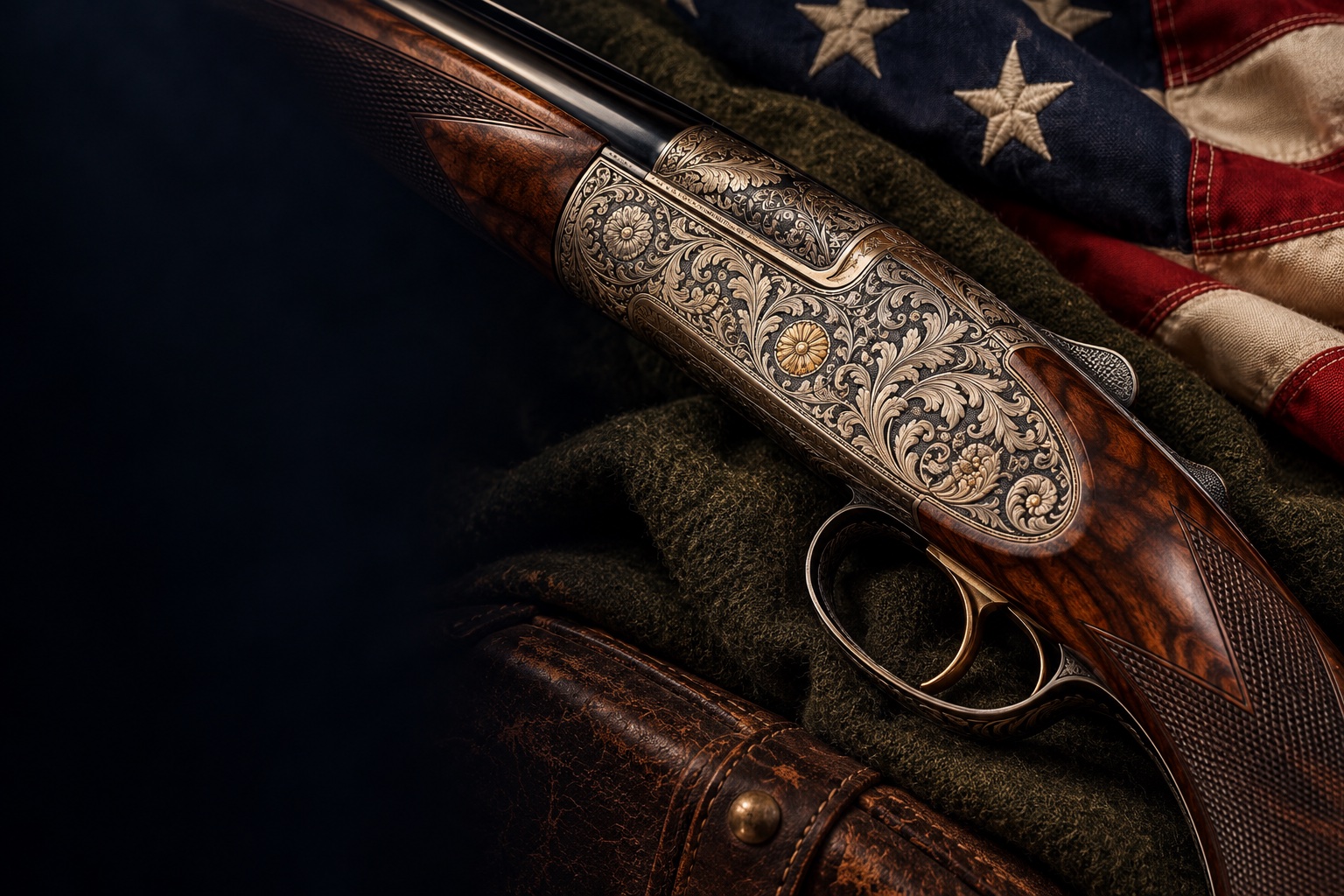
The historical Auto-5 closes the selection with the relationship between visual recognition and design identity. Browning’s sources connect its early production to Belgium and distinguish the original Auto-5 from the modern A5. A familiar outline can link the two in public memory without making them the same design.
That is the editorial reason for its inclusion. It shows how heritage can be carried by appearance while other aspects of a product change. The profile also acknowledges differing manufacturer statements around the original model’s final production years. An attractive, coherent narrative should not erase a source discrepancy simply because the unresolved detail is inconvenient.
Read the Browning Auto-5 profile →
How to read the selection
These five subjects are invitations to look more closely. They are not purchasing advice, a practical comparison across firearm categories or a claim to have identified the most influential designs through a scientific method. Cultural influence is our editorial interpretation; specific dates and distinctions are linked to sources in the individual profiles.
The limitations matter. Manufacturer histories offer useful first-party chronology while also serving brands. Museum and park records can establish facts about particular artifacts while leaving important gaps. No source here supplies hands-on observations by GunReviewLab. We publish no invented reliability results, accuracy measurements or ratings.
Read the profiles in any order. Together, they suggest a more useful approach to an iconic object: identify it precisely, place it in context and distinguish what the record establishes from what the story makes us feel. Responsible ownership remains a separate, essential conversation; our Safety & Storage hub provides a starting point for that subject.
How we approach evidence →